


Customer privacy protection
In this age of the Internet, do you worry about receiving harassment of spam messages after you purchase a product, or discover that your product purchases or personal information are illegally used by other businesses? Please do not worry; we will always put the interests of customers in the first place, so CFA-Level-I test guide ensure that your information will not be leaked to any third party. After you pass the exam, if you want to cancel your account, contact us by email and we will delete all your relevant information. Second, the purchase process of CFA Institute CFA Level I Chartered Financial Analyst prep torrent is very safe and transactions are conducted through the most reliable guarantee platform.
Guaranteed agreement
In addition to the free download of sample questions, we are also confident that candidates who use CFA-Level-I test guide will pass the exam at one go. CFA Institute CFA Level I Chartered Financial Analyst prep torrent is revised and updated according to the latest changes in the syllabus and the latest developments in theory and practice. Regardless of your weak foundation or rich experience, CFA-Level-I exam torrent can bring you unexpected results. In the past, our passing rate has remained at 99%-100%. This is the most important reason why most candidates choose CFA-Level-I test guide. Failure to pass the exam will result in a full refund. But as long as you want to continue to take the CFA Institute CFA Level I Chartered Financial Analyst exam, we will not stop helping you until you win and pass the certification.
How to book CFA CFA-Level-I: CFA Institute CFA Level I Chartered Financial Analyst Exam
You must follow these steps to apply for CFA Level 1:
- Go to the Official Site CFA Level 1
- Carefully read the directions
- Follow the steps mentioned
- Apply for the CFA level 1
Reference: https://www.cfainstitute.org/programs/cfa-program/candidate-resources/level-i-exam
When some candidates trying to overcome an exam, they will all first think of choosing a good study material to prepare for their exam. The CFA Institute CFA Level I Chartered Financial Analyst prep torrent has a variety of self-learning and self-assessment functions to test learning outcome, which will help you increase confidence to pass exam. Last but not least, our website platform has no viruses and you can download CFA-Level-I test guide at ease. If you encounter difficulties in installation or use of CFA-Level-I exam torrent, we will provide you with remote assistance from a dedicated expert to help you and provide 365 days of free updates that you do not have to worry about what you missed.

Three versions available
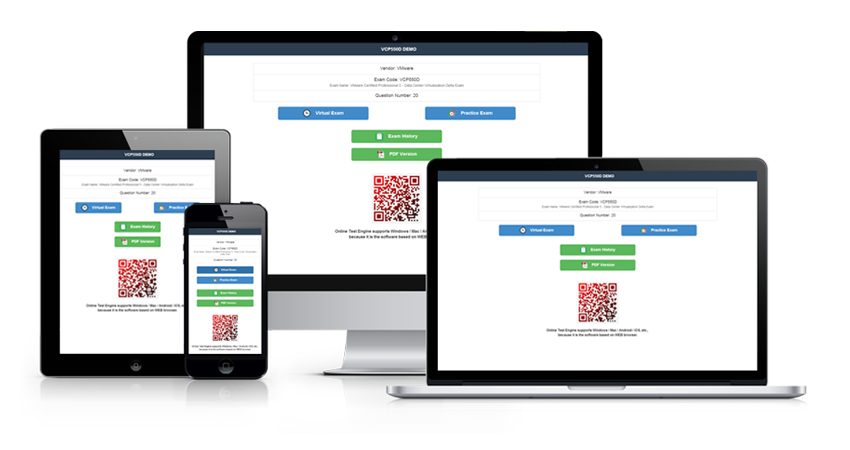
One of the biggest highlights of the CFA Institute CFA Level I Chartered Financial Analyst prep torrent is the availability of three versions: PDF, app/online, and software/pc, each with its own advantages: The PDF version of CFA-Level-I exam torrent has a free demo available for download. You can print exam materials out and read it just like you read a paper. The online version of CFA-Level-I test guide is based on web browser usage design and can be used by any browser device. At the same time, the first time it is opened on the Internet, it can be used offline next time. You can practice anytime, anywhere. The CFA Institute CFA Level I Chartered Financial Analyst software supports the MS operating system and can simulate the real test environment. The contents of the three versions are the same. Each of them neither limits the number of devices used or the number of users at the same time. You can choose according to your needs.
Topics of CFA CFA-Level-I: CFA Institute CFA Level I Chartered Financial Analyst Exam
Before preparation begins, candidates need to know the examination topics. And it's going to help them to reach the center. CFA Level 1 exam dumps will include the following topics:
- Quantitative Methods In this section, we explore quantitative concepts and techniques used in financial analysis and investment decision making. We present descriptive statistics for conveying important data attributes, such as central tendency, location, and dispersion, and introduce characteristics of return distributions. The section also considers probability theory and its application in quantifying risk for investment decision making.
- Ethical and Professional Standards The focus of this topic is ethics, related challenges to ethical behavior, and the role ethics and professionalism play in the investment industry. We provide a framework to support ethical decision making and examine the CFA Institute Code of Ethics and Standards of Professional Conduct and Global Investment Performance Standards (GIPS).
- Economics
In this section, we introduce analysis of fundamental concepts of supply and demand for individual consumers and firms. We also cover the various market structures that firms operate in as well as macroeconomic concepts and principles, including aggregate output and income measurement, aggregate demand and supply analysis, and analysis of economic growth factors. The section concludes with coverage of the business cycle and its effect on economic activity.
Fixed Income In this topic, we explain how to describe fixed income securities and their markets, yield measures, risk factors, and valuation measurements and drivers. We also cover calculating yields, values of fixed income securities, the securitization of assets, the fundamentals of bond returns and risks, and basic principles of credit analysis.
Corporate finance In this topic, we provide an introduction to corporate governance as well as investing and financing decisions. We present an overview of corporate governance along with a framework for understanding and analyzing corporate governance and stakeholder management. We also highlight the growing impact of environmental and social considerations in investing. We cover how companies make use of leverage and manage their working capital to meet short-term operational needs.
Portfolio Management In this topic, we explain the fundamentals of portfolio and risk management, including return and risk measurement and portfolio planning and construction. We examine the needs of individual and institutional investors along with the range of available investment solutions. The capital asset pricing model is used to identify optimal risk in portfolios.
Financial Reporting and Analysis Here we provide a thorough explanation of financial reporting procedures and the standards that govern financial reporting disclosures, with an emphasis on basic financial statements and how alternative accounting methods affect those statements and the analysis of them. We examine primary financial statements and provide a general framework for conducting financial statement analysis.
Equity Investments Here we explore the characteristics of equity investments, security markets, and indexes and explain how to analyze industries, companies, and equity securities as well as the use of basic equity valuation models. Global equities are important for meeting longer-term growth and diversification objectives.
Derivatives In this section, we build the conceptual framework for understanding the basic derivatives and derivative markets. We then introduce essential features and valuation concepts for forward commitments such as forwards, futures, swaps, and contingent claims. Finally, we examine arbitrage, a critical concept that links derivative pricing to the price of the underlying asset.
Alternative Investments This topic explores alternative investments, including hedge funds, private equity, real estate, commodities, and infrastructure. We cover the use of alternative investments for diversification and higher returns. In this curriculum, we define alternative investments and the characteristics they have in common.
CFA CFA-Level-I Exam Syllabus Topics:
| Section | Weight | Objectives |
|---|---|---|
| Topic 1: Derivatives | 5–8% | - Forwards, futures, options, swaps - Derivative markets and instruments - Derivative pricing and valuation basics |
| Topic 2: Equity Investments | 11–14% | - Industry and company analysis - Market organization and structure - Equity valuation models |
| Topic 3: Fixed Income | 11–14% | - Bond valuation and risk measures - Yield measures, spot rates, forward rates - Fixed income securities characteristics |
| Topic 4: Portfolio Management | 8–12% | - Risk and return concepts - Portfolio planning and construction - Asset allocation and performance measurement |
| Topic 5: Quantitative Methods | 6–9% | - Probability and hypothesis testing - Time value of money - Regression and time-series analysis - Statistical concepts and returns |
| Topic 6: Economics | 6–9% | - International trade and currency markets - Monetary and fiscal policy - Macroeconomics - Microeconomics |
| Topic 7: Financial Statement Analysis | 11–14% | - Inventories, long-lived assets, taxes, debt - Income statement, balance sheet, cash flow statement - Ratio analysis and profitability - Financial reporting standards |
| Topic 8: Alternative Investments | 7–10% | - Investment characteristics and returns - Commodities and infrastructure - Private equity, real estate, hedge funds |
| Topic 9: Corporate Issuers | 6–9% | - Business and financial risk - Corporate governance - Capital budgeting - Capital structure |
| Topic 10: Ethical and Professional Standards | 15–20% | - Global Investment Performance Standards (GIPS) - Code of Ethics and Standards of Professional Conduct |


 Belle
Belle 
 Jenny
Jenny 
 Athena
  Candance
  Heather
  Truda
Truda  Lynn
Lynn  Florence
  Daniel
 Cyril
Cyril  Nelson
  Dolores
  Agatha
  Vita
Vita  Ella
Ella  Monroe


