


Three versions available
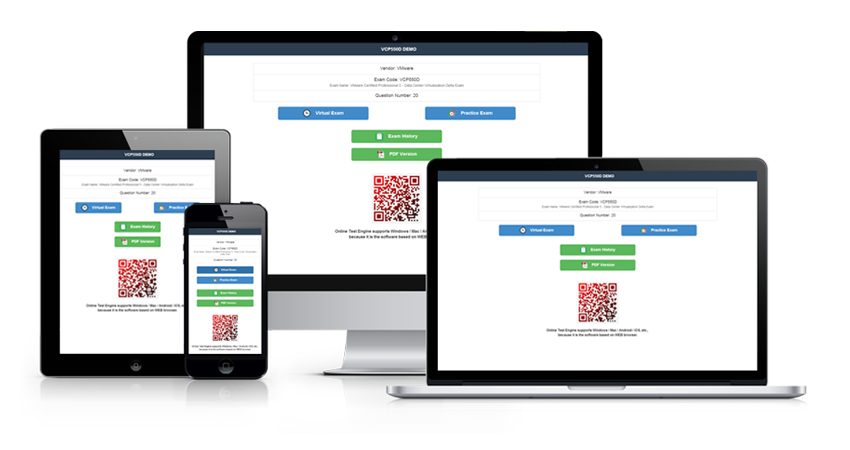
One of the biggest highlights of the Endocrinology and Diabetes (Specialty Certificate Examination) prep torrent is the availability of three versions: PDF, app/online, and software/pc, each with its own advantages: The PDF version of SEND exam torrent has a free demo available for download. You can print exam materials out and read it just like you read a paper. The online version of SEND test guide is based on web browser usage design and can be used by any browser device. At the same time, the first time it is opened on the Internet, it can be used offline next time. You can practice anytime, anywhere. The Endocrinology and Diabetes (Specialty Certificate Examination) software supports the MS operating system and can simulate the real test environment. The contents of the three versions are the same. Each of them neither limits the number of devices used or the number of users at the same time. You can choose according to your needs.
Guaranteed agreement
In addition to the free download of sample questions, we are also confident that candidates who use SEND test guide will pass the exam at one go. Endocrinology and Diabetes (Specialty Certificate Examination) prep torrent is revised and updated according to the latest changes in the syllabus and the latest developments in theory and practice. Regardless of your weak foundation or rich experience, SEND exam torrent can bring you unexpected results. In the past, our passing rate has remained at 99%-100%. This is the most important reason why most candidates choose SEND test guide. Failure to pass the exam will result in a full refund. But as long as you want to continue to take the Endocrinology and Diabetes (Specialty Certificate Examination) exam, we will not stop helping you until you win and pass the certification.
Customer privacy protection
In this age of the Internet, do you worry about receiving harassment of spam messages after you purchase a product, or discover that your product purchases or personal information are illegally used by other businesses? Please do not worry; we will always put the interests of customers in the first place, so SEND test guide ensure that your information will not be leaked to any third party. After you pass the exam, if you want to cancel your account, contact us by email and we will delete all your relevant information. Second, the purchase process of Endocrinology and Diabetes (Specialty Certificate Examination) prep torrent is very safe and transactions are conducted through the most reliable guarantee platform.
When some candidates trying to overcome an exam, they will all first think of choosing a good study material to prepare for their exam. The Endocrinology and Diabetes (Specialty Certificate Examination) prep torrent has a variety of self-learning and self-assessment functions to test learning outcome, which will help you increase confidence to pass exam. Last but not least, our website platform has no viruses and you can download SEND test guide at ease. If you encounter difficulties in installation or use of SEND exam torrent, we will provide you with remote assistance from a dedicated expert to help you and provide 365 days of free updates that you do not have to worry about what you missed.

MRCPUK Endocrinology and Diabetes (Specialty Certificate Examination) Sample Questions:
1. A 55-year-old woman presented with a 3-week history of nausea and vomiting. Her only medical complaints were frequent dyspepsia, for which she was taking indigestion tablets, and asthma for which she was taking a salbutamol inhaler as required.
On examination, there was no evidence of lymphadenopathy, her chest was clear on auscultation and abdominal examination was normal.
Investigations (before and after taking omeprazole for 3 weeks):
beforeafternormal erythrocyte sedimentation rate (mm/1st h)44<30 serum creatinine (umol/L)17011060-110 serum corrected calcium (mmol/L)2.852.402.20-2.60
serum phosphate (mmol/L)1.90.8-1.4
serum angiotensin-converting enzyme (U/L)8525-82
plasma parathyroid hormone (pmol/L)0.44.40.9-5.4
What is the most likely cause of the hypercalcaemia?
A) multiple myeloma
B) parathyroid hormone-related peptide-secreting malignancy
C) sarcoidosis
D) primary hyperparathyroidism
E) milk-alkali syndrome
2. A 47-year-old nuclear physics professor was referred for advice before taking up an overseas position, overseeing the dismantling of a reactor at the site of a recent nuclear accident. She stated that she would face a small risk of being exposed to significant radioactive contamination during her work and was concerned about her future risk of thyroid cancer.
What is the most appropriate advice?
A) no precautions are necessary for people aged 40 years or over
B) take selenium tablets
C) wear lead neck shield while outdoors
D) take potassium iodide tablets
E) avoid consuming local milk and vegetables
3. A 41-year-old man presented to his general practitioner with symptoms of palpitations, sweating and anxiety. His blood pressure was 160/102 mmHg. He was advised to take propranolol 40 mg twice daily but was admitted to hospital later that week with an episode of pulmonary oedema.
On examination at the time of admission, he was noted to be pale and sweating and he had a blood pressure of 210/124 mmHg. A phaeochromocytoma was suspected.
What is the most likely cause of the cardiovascular deterioration following administration of propranolol?
A) inadequate ?-adrenoceptor blockade because of the short half-life of the drug
B) ?1-adrenoceptor blockade leading to acute left ventricular dysfunction
C) propranolol acting as an agonist at ?1-adrenoceptors
D) inhibition of catechol-O-methyltransferase by propranolol leading to an increase in circulating noradrenaline
E) loss of ?2-adrenoceptor-mediated vasodilatation
4. A 26-year-old woman was referred by her general practitioner for the management of subfertility. Her menarche had occurred at the age of 14 and she had experienced oligomenorrhoea since the age of 16. She also complained of gradually worsening hirsutism since puberty.
Clinical examination showed central obesity, a body mass index of 32 kg/m2 (18-25) and a blood pressure of 140/90 mmHg.
The following results were obtained within 1 week of her last menstrual period.
Investigations:
overnight dexamethasone suppression test (after 1 mg dexamethasone):
serum cortisol30 nmol/L (<50)
serum dehydroepiandrosterone sulphate12 umol/L (3-12)
serum androstenedione10.0 nmol/L (0.6-8.8)
serum 17-hydroxyprogesterone38 nmol/L (1-10)
serum oestradiol200 pmol/L (200-400)
serum testosterone3.5 nmol/L (0.5-3.0)
serum sex hormone binding globulin30 nmol/L (40-137)
plasma follicle-stimulating hormone4.0 U/L (2.5-10.0)
plasma luteinising hormone6.0 U/L (2.5-10.0)
What is the most likely diagnosis?
A) ovarian androgen-secreting tumour
B) polycystic ovary syndrome
C) adrenal androgen-secreting tumour
D) Cushing's syndrome
E) late-onset congenital adrenal hyperplasia
5. An 18-year-old woman was found to have a blood pressure of 164/102 mmHg at a preemployment medical examination. She gave no family history of hypertension. On enquiry, she said that she had not yet started to menstruate.
On initial clinical examination, she appeared well. She was 1.72 m tall (>90th centile) and had a body mass index of 22 kg/m2 (18-25). There was no evidence of axillary hair, and pubic hair was scanty (Tanner stage 1). Breast development was immature (Tanner stage 1).
Investigations:
serum sodium142 mmol/L (137-144)
serum potassium2.7 mmol/L (3.5-4.9)
serum urea4.6 mmol/L (2.5-7.0)
serum creatinine102 umol/L (60-110)
estimated glomerular filtration rate (MDRD)>60 mL/min/1.73 m2 (>60)
plasma renin activity (after 30 min supine)1.0 pmol/mL/h (1.1-2.7)
plasma aldosterone (after 30 min supine)125 pmol/L (135-400)
serum cortisol (09.00 h)190 nmol/L (200-700)
What is the most likely underlying diagnosis?
A) deoxycorticosterone-secreting adrenal tumour
B) adrenal 17-hydroxylase deficiency
C) 11-hydroxysteroid dehydrogenase type 2 deficiency
D) adrenal 11-hydroxylase deficiency
E) adrenal 21-hydroxylase deficiency
Solutions:
| Question # 1 Answer: E | Question # 2 Answer: D | Question # 3 Answer: E | Question # 4 Answer: E | Question # 5 Answer: B |


 Burgess
 Baron
Baron 
 Daniel
  Cherry
 Zara
Zara  Len
Len  Blanche
  Mignon
  Ziv
Ziv  Leo
Leo  Eartha
  Aldrich
  Sid
Sid  Morgan
  Nicola


