


When some candidates trying to overcome an exam, they will all first think of choosing a good study material to prepare for their exam. The Implementing Cisco Service Provider Mobility LTE Networks (SPLTE) prep torrent has a variety of self-learning and self-assessment functions to test learning outcome, which will help you increase confidence to pass exam. Last but not least, our website platform has no viruses and you can download 600-212 test guide at ease. If you encounter difficulties in installation or use of 600-212 exam torrent, we will provide you with remote assistance from a dedicated expert to help you and provide 365 days of free updates that you do not have to worry about what you missed.

Customer privacy protection
In this age of the Internet, do you worry about receiving harassment of spam messages after you purchase a product, or discover that your product purchases or personal information are illegally used by other businesses? Please do not worry; we will always put the interests of customers in the first place, so 600-212 test guide ensure that your information will not be leaked to any third party. After you pass the exam, if you want to cancel your account, contact us by email and we will delete all your relevant information. Second, the purchase process of Implementing Cisco Service Provider Mobility LTE Networks (SPLTE) prep torrent is very safe and transactions are conducted through the most reliable guarantee platform.
Three versions available
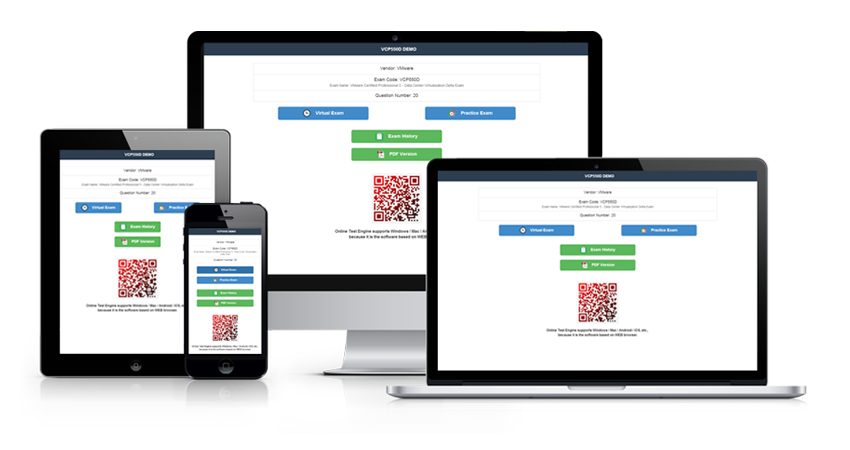
One of the biggest highlights of the Implementing Cisco Service Provider Mobility LTE Networks (SPLTE) prep torrent is the availability of three versions: PDF, app/online, and software/pc, each with its own advantages: The PDF version of 600-212 exam torrent has a free demo available for download. You can print exam materials out and read it just like you read a paper. The online version of 600-212 test guide is based on web browser usage design and can be used by any browser device. At the same time, the first time it is opened on the Internet, it can be used offline next time. You can practice anytime, anywhere. The Implementing Cisco Service Provider Mobility LTE Networks (SPLTE) software supports the MS operating system and can simulate the real test environment. The contents of the three versions are the same. Each of them neither limits the number of devices used or the number of users at the same time. You can choose according to your needs.
Cisco 600-212 Exam Topics:
| Section | Weight | Objectives |
|---|---|---|
| Voice Over LTE | 20% | 1 VoLTE application messages/protocols a) Describe VoLTE specific diameter interface b) Describe XCAP, LDAP, SPML c) Describe CAMEL, CAP, INAP, SOAP, MSML 2 Voice over LTE architecture a) Describe voice evolution in mobile network b) Identify VoLTE system architecture and functions of network elements 3 Network elements in voice over LTE a) Describe CSCF b) Describe ENUM c) Describe MNP — mobile number portability/database d) Describe telephony application server e) Describe DRA/DEA f) Describe HSS g) Describe PCRF h) Describe ATCF,ATGW i) Describe MRF j) Describe understand OSS and BSS 4 QoS a) Describe QoS in EPS b) Describe end-to-end QoS in VoLTE 5 Interfaces and signaling messages a) Configure Gx interface and signaling b) Design Rx interface and signaling c) Implement Cx interface and signaling d) Describe ISC interface and signaling e) Describe Ut interface 6 End-to-end call flow a) Describe IMS client attach to EPC b) Describe P-CSCF discovery c) Describe IMS registration, re-registration and de-registration d) Describe mobile-originated VoLTE call e) Describe mobile-terminated VoLTE call f) Describe emergency VoLTE call 7 Supplementary services a) Describe IR.92 supplementary service overview b) Describe IR.94 supplementary service overview c) Describe Important services call flows 8 VoLTE Interworking a) Describe PSTN interworking b) Describe IMS/SIP interworking c) Describe e-SRVCC |
| MME (4G LTE) | 16% | 1 Network functions LTE –MME a) Identify key functions of the MME and basic understanding of architecture and interfaces b) Describe MME states of MM and CM management c) Describe protocol stacks and procedures d) Describe mobility management signaling and call flows e) Describe session management signaling and call flows f) Describe location management signaling and call flows g0 Describe SGS procedures and signaling call flows h) Describe intra-MME handovers procedure i) Describe intra-RAT handovers procedure j) Describe inter-MME handover procedures 2 QOS architecture a) Describe the overall QOS functionality in LTE for single and multi pdn b) Describe the QOS mapping from UMTS to LTE 3 Configurations a) Configure S1 interface with corresponding services and system parameters b) Configure S6a interface with corresponding services and system parameters c) Configure S11 interface with corresponding services and system parameters d) Configure S13 interface with corresponding services and system parameters e) Identify and implement gateway selection mechanisms f) Identify and implement MME operator policy and feature sets g) Troubleshoot configurations 4 Network sharing a) Describe MOCN architecture b) Describe GWCN architecture 5 Security a) Describe LTE security principles for MME network node b) Explain security functions for mobility management procedures 6 Idle mode signaling reduction a) Identify IDLE mode signaling reduction in an LTE network b) Describe IDLE mode signaling establishment c) Describe IDLE mode signaling reduction deactivation 7 CSFB a) Describe CSFB architecture in LTE network b) Describe CSFB call flow and signaling 8 IPv6 support a) Configure IPV6 and dual stack EPS bearer scenarios b) Configure and implement transport plane IPV6 support for MME |
| Charging | 13% | 1 Offline charging service a) Describe offline charging architecture b) Explain the GTPP protocol header and messages c) Explain charging data record transport through GTP' d) Compare and contrast GTPP transfer scenarios e) Describe and differentiate mobility records generated by MPC nodes f) Identify and list conditions for record closure and generation g) Explain Rf offline charging scenarios h) Identify and list offline charging error cases i) Configure for offline billing j) Troubleshoot for offline billing |
| SGW (4G LTE) | 10% | 1 Network functions LTE-SGW a) Identify key functions of the SGW and basic understanding of architecture and interfaces b) Describe SGW attach procedures and call flows c) Configure S1-U interface with corresponding services and system parameters d) Configure S5/S8 using PMIP/GTP interface with corresponding services and system parameters e) Configure S11 interface with corresponding services and system parameters 2 Feature functionality and extended application a) Describe multi-PDN support for SGW b) Describe downlink delay notification for SGW c) Describe idle mode signaling reduction support for SGW d) Configure and implement IPV6 support for SGW 3 Internetworking between LTE and other technologies a) Describe interaction with CDMA/eHRPD internetworking b) Describe interaction with GSM/UMTS internetworking c) Configure S4 interface with corresponding services and system parameters d) Configure S12 interface with corresponding services and system parameters e) Configure S103 interface with corresponding services and system parameters 4 Charging a) Configure Gx interface with corresponding services and system parameters 5 QoS a) Describe QoS bearer management and marking for SGW b) Configuring DSCP marking for SGW |
| PGW (4G LTE/EHRPD) | 15% | 1 Architecture overview a) Identify key functions of the PGW and basic understanding of architecture and interfaces 2 Implement S5/S8 and Gn/Gp interface a) Describe GTP protocol b) Describe mobility management/session management call flows c) Describe QoS in EPC d) Configure S5/S8 interface with corresponding services and system parameters e) Troubleshoot S5/S8 and Gn/Gp 3 APN a) Describe the various IP address allocation mechanisms b) Describe the concept of virtual APNs c) Configure APNs and virtual APNs with corresponding service and system parameters d) Configure IP source address validation and access control list e) Troubleshoot APN 4 Implement Gx interface a) Describe the important diameter AVPs needed for Gx b) Describe basic Gx call flows c) Configure Gx interface with corresponding services and system parameters d) Troubleshoot Gx interface e) Describe the common policy use cases f) Configure failure handling modes g) Configure usage monitoring over Gx 5 Implement Gy interface a) Describe the important diameter AVPs needed for Gy b) Describe the basic Gy call flows c) Configure Gy interface with corresponding services and system parameters d) Troubleshoot Gy interface e) Configure failure handling modes f) Describe OCS selection based on static configuration g) Describe RADIUS attributes and PCRF out-of-quota redirection handling 6 Implement AAA Interface a) Describe the basic AAA authentication and accounting call flows b) Describe the important RADIUS attributes for authentication and accounting c) Configure RADIUS interface with corresponding services and system parameters d) Troubleshoot RADIUS interface 7 Implement S6b interface a) Describe the important diameter AVPs needed for S6b b) Describe the basic S6b call flows c) Configure S6b interface with corresponding services and system parameters d) Troubleshoot S6b interface 8 Interworking with non-3GPP access networks a) Configure S2a interface with corresponding services and system parameters b) Configure S2b interface with corresponding services and system parameters c) Configure S2c interface with corresponding services and system parameters d) Configure LMA functionality on a PGW e) Configure non-3GPP IRAT handovers f) Troubleshoot S2b and S2c interfaces 9 SGi Interface a) Configure and implement various IP transport types b) Configure and implement static and dynamic routing protocols |
| Management Protocols | 11% | 1 TACACS a) Describe admin authentication and command authorization methods b) Configure Local administration levels c) Configure external authentication TACACS servers 2 Performance counters/statistics a) Describe the various performance counters b) Describe the collection and processing of performance counters c) Describe the common KPIs for various MPC nodes d) Configure counters and KPIs 3 Fault management a) Describe SNMP protocols, alarms, notification and MIBs b) Configure SNMP traps, filters and thresholds 4 syslog/events Log a) Describe system log formats and filters b) Configure syslog servers and event logs 5 Security a) Describe user access control 6 NTP a) Describe system timing b) Configure NTP servers, system clock, time zone and timestamps |
| LTE | 5% | 1 Describe and differentiate LTE / SAE architecture 2 Explain attach procedure and call flow |
| Lawful Intercept | 5% | 1 Describe lawful intercept architecture and events 2 Configure lawful interception 3 Describe lawful intercept trigger element |
| Other Interfaces | 5% | 1 AAA/diameter related interfaces a) Describe SWx interface b) Describe S9 interface c) Describe Sp interface 2 HRPD related interfaces a) Describe S101 b) Describe S103 |
Guaranteed agreement
In addition to the free download of sample questions, we are also confident that candidates who use 600-212 test guide will pass the exam at one go. Implementing Cisco Service Provider Mobility LTE Networks (SPLTE) prep torrent is revised and updated according to the latest changes in the syllabus and the latest developments in theory and practice. Regardless of your weak foundation or rich experience, 600-212 exam torrent can bring you unexpected results. In the past, our passing rate has remained at 99%-100%. This is the most important reason why most candidates choose 600-212 test guide. Failure to pass the exam will result in a full refund. But as long as you want to continue to take the Implementing Cisco Service Provider Mobility LTE Networks (SPLTE) exam, we will not stop helping you until you win and pass the certification.
Cisco 600-212 Exam Certification Details:
| Recommended Training | Implementing Cisco Service Provider Mobility LTE Networks – (SPLTE) |
| Number of Questions | 65-75 |
| Exam Registration | PEARSON VUE |
| Duration | 90 minutes |
| Sample Questions | Cisco 600-212 Sample Questions |
| Exam Price | $300 USD |
| Exam Code | 600-212 SPLTE |
| Passing Score | Variable (750-850 / 1000 Approx.) |
| Exam Name | Implementing Cisco Service Provider Mobility LTE Networks |


 Harriet
 Beau
Beau  Adelaide
 Tom
Tom  Ingram
  Arnold
  Phoebe
  Aubrey
  Quintina
  Samuel
 Lyndon
  Lauren


