Topics Measured by 201-450 Exam
This test consists of seven domains that are important for the candidate to understand before taking the main validation. Thus, the candidates should master and clear such concepts in the following areas:
- Network Configuration;
- System Startup;
- Filesystem and Devices;
- Capacity Planning;
- System Maintenance.
- Linux Kernel;
- Advanced Storage Device Administration;
The first tested domain covers capacity planning. It deals with measuring and troubleshooting resource problems. In a nutshell, it includes the knowledge areas like measuring I/O for disks, I/O necessary for networks, firewalls as well as the throughput for routers, correlating symptoms with problems, and identifying bottlenecks in systems. You will also forecast possible resource necessities that include observing the growth rate of capacity usage, measuring methods to control the usage of the IT framework, and forecasting the breakpoint of configuration.
The second area focuses on system startup. It is a vast topic that includes the optimizing SysV-init startup for the system. The candidate must know how to thoroughly understand the system, Linux boot process, and SysV-init. In addition, you will learn how to interact with SysV-init run levels and systemd targets. You should also know about operating the systems during the recovery mode and boot process. The awareness of bootloaders and their essential features is important for the candidate to understand before taking the final exam.
The third objective involves filesystems and devices. It revolves around the operation of Linux filesystems and configuring different types of filesystem types. Here, you don't only come across the configuration of filesystems but also their maintenance, which is done by using the utilities. Moreover, the candidate must be able to configure automount filesystems by utilizing AutoFS. It includes creating the filesystem for devices like CD-ROM and information of the encrypted filesystems.
The fourth scope includes Linux Kernel. Within such a segment, you will come across the kernel components that comprise the implementation of various types of kernel images, development kernels, classifying patches, and utilizing the kernel modules. Furthermore, the knowledge of compiling a kernel and its management alongside troubleshooting plays an essential role in 201-450 test. The candidate should also have skills to recognize device detection and administration using the udev. Finally, this area focuses on troubleshooting udev rules and correcting the runtime issues.
The fifth part of the official exam covers network configuration. The candidate's knowledge about basic network configuration is tested here. Particularly, this includes the utilities to arrange and execute ethernet interfaces for networks and providing access to those networks that are wireless. Besides, you will also get to know how to recognize the common network issues and the location for the correct configuration of commands and files. Lastly, you should also know the configuration of the network device for applying several network schemes and determine the communication problems that occur in the network that is multi-homed.
The sixth domain is advanced storage device administration. While dealing with it, you will be learning about configuring RAID and implementing RAID software. You will also be tested upon the subtopics like adjusting storage devices and logical volume manager, which includes generating and eliminating the logical volumes, physical volumes, and volume groups. The candidate should also know software tools to modify and review hard disk settings.
The seventh and last tested topic emphasizes system maintenance. It details creating and installing programs from source. Thus, you will unload the source code by utilizing the compression archive efficacies. The candidate will also be tested on backup operations that include performing manual and partial backups, verifying the back & integrity files, the awareness of network backup solutions, and the drawbacks of tapes, disk, CDR, and other backup media. Moreover, you must have the skills to inform the users on system-related issues by communicating with the users.
Reference: https://www.lpi.org/our-certifications/exam-201-objectives
Guaranteed agreement
In addition to the free download of sample questions, we are also confident that candidates who use 201-450 Deutsch test guide will pass the exam at one go. LPIC-2 Exam 201, Part 1 of 2, version 4.5 (201-450 Deutsch Version) prep torrent is revised and updated according to the latest changes in the syllabus and the latest developments in theory and practice. Regardless of your weak foundation or rich experience, 201-450 Deutsch exam torrent can bring you unexpected results. In the past, our passing rate has remained at 99%-100%. This is the most important reason why most candidates choose 201-450 Deutsch test guide. Failure to pass the exam will result in a full refund. But as long as you want to continue to take the LPIC-2 Exam 201, Part 1 of 2, version 4.5 (201-450 Deutsch Version) exam, we will not stop helping you until you win and pass the certification.
Three versions available
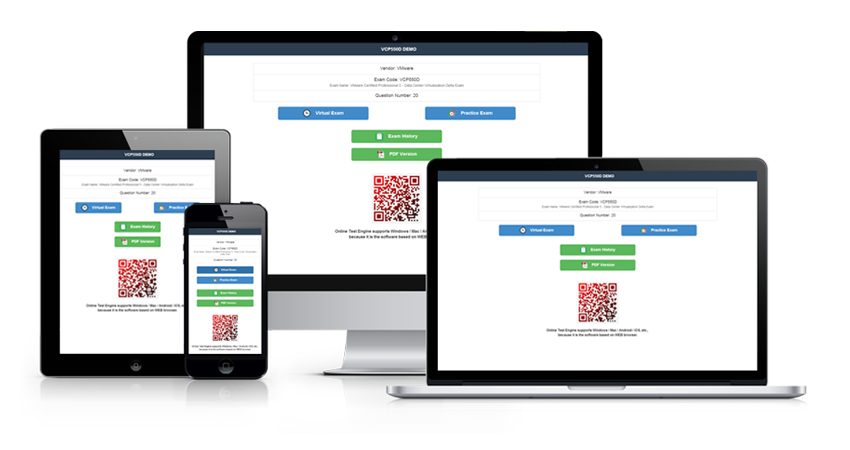
One of the biggest highlights of the LPIC-2 Exam 201, Part 1 of 2, version 4.5 (201-450 Deutsch Version) prep torrent is the availability of three versions: PDF, app/online, and software/pc, each with its own advantages: The PDF version of 201-450 Deutsch exam torrent has a free demo available for download. You can print exam materials out and read it just like you read a paper. The online version of 201-450 Deutsch test guide is based on web browser usage design and can be used by any browser device. At the same time, the first time it is opened on the Internet, it can be used offline next time. You can practice anytime, anywhere. The LPIC-2 Exam 201, Part 1 of 2, version 4.5 (201-450 Deutsch Version) software supports the MS operating system and can simulate the real test environment. The contents of the three versions are the same. Each of them neither limits the number of devices used or the number of users at the same time. You can choose according to your needs.
Customer privacy protection
In this age of the Internet, do you worry about receiving harassment of spam messages after you purchase a product, or discover that your product purchases or personal information are illegally used by other businesses? Please do not worry; we will always put the interests of customers in the first place, so 201-450 Deutsch test guide ensure that your information will not be leaked to any third party. After you pass the exam, if you want to cancel your account, contact us by email and we will delete all your relevant information. Second, the purchase process of LPIC-2 Exam 201, Part 1 of 2, version 4.5 (201-450 Deutsch Version) prep torrent is very safe and transactions are conducted through the most reliable guarantee platform.
When some candidates trying to overcome an exam, they will all first think of choosing a good study material to prepare for their exam. The LPIC-2 Exam 201, Part 1 of 2, version 4.5 (201-450 Deutsch Version) prep torrent has a variety of self-learning and self-assessment functions to test learning outcome, which will help you increase confidence to pass exam. Last but not least, our website platform has no viruses and you can download 201-450 Deutsch test guide at ease. If you encounter difficulties in installation or use of 201-450 Deutsch exam torrent, we will provide you with remote assistance from a dedicated expert to help you and provide 365 days of free updates that you do not have to worry about what you missed.

Exam Syllabus
The highlights of the topics covered in the LPI 201-450 certification exam are as follows:
- System Startup
Within this subject area, the individuals should be capable of querying and modifying the behaviour of system services at different run/targets levels. They should also have the ability to manipulate a Linux system throughout the boot process & recovery mode. Additionally, the learners need to be familiar with extra bootloaders as well as their main features.
- Linux Kernel
The examinees should have proficiency in using the kernel elements needed for specific system resources & requirements, hardware, as well as hardware drivers. In addition, they will have to demonstrate that they are capable of properly configuring a kernel to disable or include particular Linux kernel features as appropriate. The applicants should also be able to handle or/and query a 2.6.x, 3.x, or 4.x kernel as well as its loadable modules.
- Capacity Planning
The candidates should be capable of measuring hardware resource & network bandwidth, define and troubleshoot resource issues. They will also need to demonstrate their ability to monitor resource utilization to forecast prospective resource needs.
- System Maintenance
You should be capable of building and installing an executable program from the source as well as unpack a file of sources. You need to have proficiency in utilizing system devices to back up crucial system data. Moreover, you should possess the skills in notifying the users about the current issues related to the system.
- Network Configuration
The test takers should be capable of configuring a network device to connect to a local, wired or wireless, and wide-area network. They should have the capacity to communicate between various subnets within a single network, including both IPv4 and IPv6 networks. The individuals need to develop competency in configuring a network device to apply different network authentication schemes, customizing a multi-homed network device, as well as resolving communication issues. Other skills covered within this section include identifying and correcting most frequent network setup problems, including expertise in locations for fundamental configuration commands & files.
- Filesystem & Devices
The students should be capable of properly configuring and navigating the typical Linux filesystem. This topic also includes customizing and mounting different filesystem types. The applicants need to demonstrate their proficiency in maintaining a Linux filesystem with the help of system utilities as well as manipulating typical filesystems & monitoring SMART devices. Moreover, they should be able to customize automount filesystems with the help of AutoFS, create filesystems for devices such as CD-ROMs, and have the fundamental feature competency in encrypted filesystems.
- Advanced Storage Device Administration
The examinees should have the ability to customize and apply software RAID, including utilizing and customizing RAID 0, 1 and 5. They should also be able to customize kernel options to support different drives. Additionally, this domain encompasses their familiarity with software tools in order to view & modify hard disk settings. The candidates need to be capable of creating and removing volume groups, physical volumes, and logical volumes.