


Three versions available
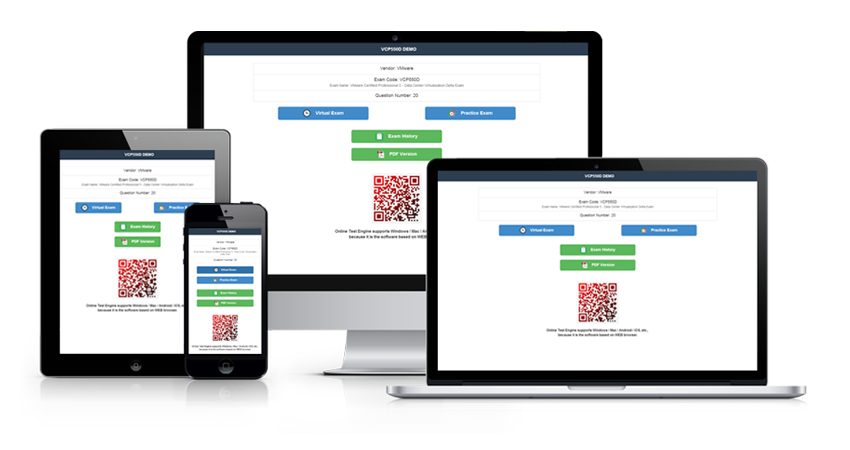
One of the biggest highlights of the MuleSoft Certified Developer - Integration and API Associate (Mule 3) prep torrent is the availability of three versions: PDF, app/online, and software/pc, each with its own advantages: The PDF version of MCD-Assoc exam torrent has a free demo available for download. You can print exam materials out and read it just like you read a paper. The online version of MCD-Assoc test guide is based on web browser usage design and can be used by any browser device. At the same time, the first time it is opened on the Internet, it can be used offline next time. You can practice anytime, anywhere. The MuleSoft Certified Developer - Integration and API Associate (Mule 3) software supports the MS operating system and can simulate the real test environment. The contents of the three versions are the same. Each of them neither limits the number of devices used or the number of users at the same time. You can choose according to your needs.
MuleSoft MCD-Assoc Exam Syllabus Topics:
| Topic | Details |
|---|---|
| Topic 1 |
|
| Topic 2 |
|
| Topic 3 |
|
| Topic 4 |
|
| Topic 5 |
|
| Topic 6 |
|
| Topic 7 |
|
| Topic 8 |
|
Reference: https://training.mulesoft.com/exam/mcd-assoc
Customer privacy protection
In this age of the Internet, do you worry about receiving harassment of spam messages after you purchase a product, or discover that your product purchases or personal information are illegally used by other businesses? Please do not worry; we will always put the interests of customers in the first place, so MCD-Assoc test guide ensure that your information will not be leaked to any third party. After you pass the exam, if you want to cancel your account, contact us by email and we will delete all your relevant information. Second, the purchase process of MuleSoft Certified Developer - Integration and API Associate (Mule 3) prep torrent is very safe and transactions are conducted through the most reliable guarantee platform.
When some candidates trying to overcome an exam, they will all first think of choosing a good study material to prepare for their exam. The MuleSoft Certified Developer - Integration and API Associate (Mule 3) prep torrent has a variety of self-learning and self-assessment functions to test learning outcome, which will help you increase confidence to pass exam. Last but not least, our website platform has no viruses and you can download MCD-Assoc test guide at ease. If you encounter difficulties in installation or use of MCD-Assoc exam torrent, we will provide you with remote assistance from a dedicated expert to help you and provide 365 days of free updates that you do not have to worry about what you missed.

MuleSoft Certified Developer - Integration and API Associate (Mule 3) Certification Path
MuleSoft Certified Developer - Integration and API Associate (Mule 3) Exam is foundation level Certification. As such There is no prerequisite for this course. Anyone who is having keen interest and familiar with MuleSoft technology are well invited to pursue this certification.
Guaranteed agreement
In addition to the free download of sample questions, we are also confident that candidates who use MCD-Assoc test guide will pass the exam at one go. MuleSoft Certified Developer - Integration and API Associate (Mule 3) prep torrent is revised and updated according to the latest changes in the syllabus and the latest developments in theory and practice. Regardless of your weak foundation or rich experience, MCD-Assoc exam torrent can bring you unexpected results. In the past, our passing rate has remained at 99%-100%. This is the most important reason why most candidates choose MCD-Assoc test guide. Failure to pass the exam will result in a full refund. But as long as you want to continue to take the MuleSoft Certified Developer - Integration and API Associate (Mule 3) exam, we will not stop helping you until you win and pass the certification.
Topics of MuleSoft Certified Developer - Integration and API Associate (Mule 3) Exam
Candidates must know the exam topics before they start of preparation. Because it will really help them in hitting the core. Our MuleSoft Certified Developer - Integration and API Associate (Mule 3) exam dumps will include the following topics:
1. Explaining application network basics
- Define and correctly use the terms API, API implementation, API interface, API consumer, and API - invocation.
- Explain MuleSoft's proposal for closing the IT delivery gap.
- Describe the role and characteristics of the “modern API.”
- Describe the basics of the HTTP protocol and the characteristics of requests and responses.
- Define and describe the benefits of API-led connectivity and application networks.
- Describe the purpose and roles of a Center for Enablement (C4E).
- Describe the capabilities and high-level components of Anypoint Platform for the API lifecycle.
2. Designing and consuming APIs
- Use RAML to define API parameters, requests, and responses.
- Read a RAML spec and formulate RESTful requests with query parameters and/or headers as appropriate.
- Describe the lifecycle of the “modern API.”
- Identify when and how to define query parameters vs URI parameters.
- Use RAML to define reusable data types and format-independent examples.
- Use RAML to define API resources, nested resources, and methods.
3. Accessing and modifying Mule events
- Enrich Mule events using target parameters.
- Use transformers to set event payloads, attributes, and variables.
- Write DataWeave expressions to access and modify event payloads, attributes, and variables.
- Describe the Mule event data structure.
4. Structuring Mule applications
- Parameterize an application using property placeholders.
- Specify what data (payload, attributes, variables) is persisted between flows when a Flow Reference - is used.
- Break an application into multiple flows using private flows, subflows, and the Flow Reference component.
- Define and reuse global configurations in an application.
- Specify what data (payload, attributes, variables) is persisted between flows when a Mule event - crosses a connection boundary.
- Specify what data (payload, attributes, variables) exists in a flow before and after a call in the middle of a flow to an external resource.
5. Building API implementation interfaces
- Describe the features and benefits of APIkit.
- Use APIkit to create implementation flows from a RAML file.
- Manually create a RESTful interface for a Mule application.
- Describe how requests are routed through flows generated by APIkit.
- Generate a REST Connector from a RAML specification.
6. Routing events
- Use the Choice router to route events based on conditional logic.
- Validate data using the Validation module.
- Use the Scatter-Gather router to multicast events.
7. Handling errors
- Compare and contrast how the On Error Continue and On Error Propagate scopes work.
- Describe the default error handling in a Mule application.
- Create one or more error handlers for a flow.
- Use the Try scope to specify error handlers for one or more event processors.
- Define a custom global default error handler for an application and identify in what situations it will be used.
- Describe the data structure of the Mule Error object.
- Map errors to custom application errors.
8. Transforming data with DataWeave
- Define and use custom data types.
- Call Mule flows from a DataWeave script.
- Apply correct DataWeave syntax to format strings, numbers, and dates.
- Apply correct DataWeave syntax to coerce data types.
- Define and use DataWeave variables, functions, and modules.
- Use DataWeave functions.
- Write DataWeave scripts to convert JSON, XML, and Java data structures to different data structures and data types.
9. Using Connectors
- Use the JMS connector to publish and listen for JMS messages.
- Retrieve data from a REST service using HTTP Request or a REST Connector.
- List, read, and write local files using the File connector.
- Use a Web Service Consumer connector to consume SOAP web services.
- Use the Transform Message component to pass arguments to a SOAP web service.
- Create parameterized SQL queries for the Database connector.
- Retrieve data from a Database using the Database connector.
- List, read, and write remote files using the FTP connector.
10. Processing records
- List and compare and contrast the methods for processing individual records in a collection.
- Persist data between flow executions using the Object Store.
- Use the For Each scope to process records.
- Describe the features, benefits, and process to use watermarking.
- Use connectors with automatic watermarking capabilities.
- Use the Scheduler component to trigger a flow.
- Use a Batch Job with Batch Steps and a Batch Aggregator to process records.
- Use connector listeners to trigger flows.
- Explain how Mule events are processed by the For Each scope.
- Explain how Mule events are processed by the Batch Job scope.
- Describe the features, benefits, and process to use automatic watermarking vs manual watermarking.
11. Debugging and troubleshooting Mule applications
- Install missing Maven dependencies.
- Use breakpoints to inspect a Mule event during runtime.
- Read and decipher Mule log error messages.
12. Deploying and managing APIs and integrations
- Use policies, including client ID enforcement, to secure an API.
- Use CloudHub properties to ensure deployment success.
- Package Mule applications for deployment.
- Create and deploy API proxies.
- Deploy applications to CloudHub.
- Create SLA tiers and apply SLA based policies.
- Connect an API implementation to API Manager using autodiscovery.


 Yvette
 Giselle
 Jerome
 Murphy
  Lambert
  Cherry
  Bancroft
  Joa
Joa  Tab
Tab  Xavier
  Maxwell
  Kyle
Kyle  Donald
  Adam
Adam  Evan
Evan  Arthur
  Herman


