


Customer privacy protection
In this age of the Internet, do you worry about receiving harassment of spam messages after you purchase a product, or discover that your product purchases or personal information are illegally used by other businesses? Please do not worry; we will always put the interests of customers in the first place, so 1z0-1058-23 test guide ensure that your information will not be leaked to any third party. After you pass the exam, if you want to cancel your account, contact us by email and we will delete all your relevant information. Second, the purchase process of Oracle Risk Management Cloud 2023 Implementation Professional prep torrent is very safe and transactions are conducted through the most reliable guarantee platform.
When some candidates trying to overcome an exam, they will all first think of choosing a good study material to prepare for their exam. The Oracle Risk Management Cloud 2023 Implementation Professional prep torrent has a variety of self-learning and self-assessment functions to test learning outcome, which will help you increase confidence to pass exam. Last but not least, our website platform has no viruses and you can download 1z0-1058-23 test guide at ease. If you encounter difficulties in installation or use of 1z0-1058-23 exam torrent, we will provide you with remote assistance from a dedicated expert to help you and provide 365 days of free updates that you do not have to worry about what you missed.

Guaranteed agreement
In addition to the free download of sample questions, we are also confident that candidates who use 1z0-1058-23 test guide will pass the exam at one go. Oracle Risk Management Cloud 2023 Implementation Professional prep torrent is revised and updated according to the latest changes in the syllabus and the latest developments in theory and practice. Regardless of your weak foundation or rich experience, 1z0-1058-23 exam torrent can bring you unexpected results. In the past, our passing rate has remained at 99%-100%. This is the most important reason why most candidates choose 1z0-1058-23 test guide. Failure to pass the exam will result in a full refund. But as long as you want to continue to take the Oracle Risk Management Cloud 2023 Implementation Professional exam, we will not stop helping you until you win and pass the certification.
Three versions available
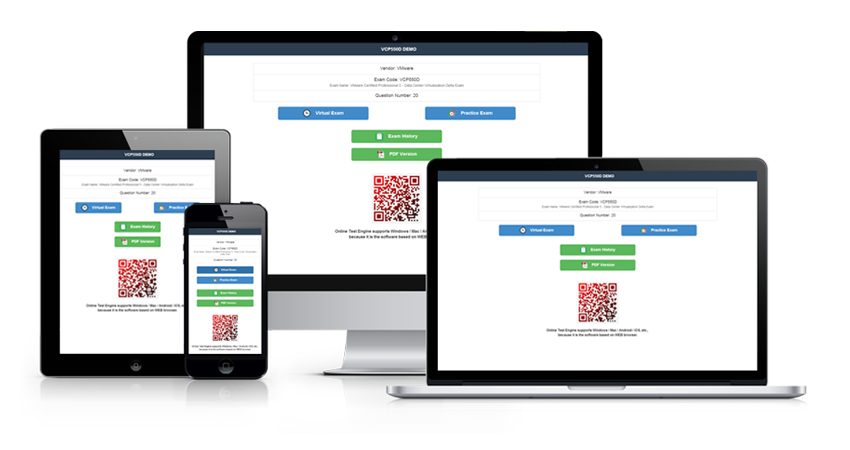
One of the biggest highlights of the Oracle Risk Management Cloud 2023 Implementation Professional prep torrent is the availability of three versions: PDF, app/online, and software/pc, each with its own advantages: The PDF version of 1z0-1058-23 exam torrent has a free demo available for download. You can print exam materials out and read it just like you read a paper. The online version of 1z0-1058-23 test guide is based on web browser usage design and can be used by any browser device. At the same time, the first time it is opened on the Internet, it can be used offline next time. You can practice anytime, anywhere. The Oracle Risk Management Cloud 2023 Implementation Professional software supports the MS operating system and can simulate the real test environment. The contents of the three versions are the same. Each of them neither limits the number of devices used or the number of users at the same time. You can choose according to your needs.
Oracle Risk Management Cloud 2023 Implementation Professional Sample Questions:
1. You have two segregation of duties requirements:
1) a user can access either the supplier creation pages or the invoice pages, but not both.
2) a user can access either the invoice creation pages or the payment creation pages, but not both.
How must these requirements be met in Advanced Access Controls?
A) Construct one entitlement: "Create Supplier & Create Invoice & Create Payment"
B) Construct three controls, and create controls based on the models: "Create Supplier & Create Invoice",
"Create Invoice & Create Payment", "Create Supplier & Create Payment"
C) Construct one model with three condition filters where the Function Name Equals "Create Supplier",
"Create Invoice" and "Create Payment"
D) Construct two models, and create controls based on the models: "Create Supplier & Create Invoice",
"Create Invoice & Create Payment"
E) Construct one model: "Create Supplier & Create Invoice & Create Payment"
2. You have five business units in our company, BU1 through BU5. You want to build a transaction model to identify suppliers who have been paid more than $100,000 USD across all business units except BU5.
Which two filters must be combined? (Choose two.)
A) Add a standard filter where the "Payment" object's "Organization ID" equals BU1, BU2, BU3, BU4.
B) Add a standard filter where the "Payment" object's "Organization ID" is equal to itself.
C) Add a function filter grouping by "Supplier ID" where the sum of "Payment Amount" is greater than
100,000.
D) Add a standard filter where the "Payment" object's "Organization ID" equals BU5, and advanced option
"Exclude" is checked.
E) Add a function filter grouping by "Organization ID" where the sum of "Payment Amount" is greater than 100,000.
3. When you view or edit a transaction incident, you may see extra columns that are not present in the business objects used in the control.
What three kinds of control logic or conditions can cause this? (Choose three.)
A) Similar
B) Not in
C) Between (when using a date attribute)
D) Equals (when the same attribute is used on both sides of the condition)
E) Average Function
4. An organization has a list of companies with which they no longer wish to do business. The list is not stored in their ERP Could but is stored in a file.
Which transaction model will identify payments made to these companies?
A) Create an Imported business object that can be used in conjunction with Oracle's pre-built "Payment" object. One both objects are in your model, add this standard filter: the "Payment" object's "Remit to Supplier Name" is similar to the custom object's "Company Name" by 95%.
B) Add a configurable attribute "Company Name" to Oracle's pre-built "Payment" object. Then add this standard filter: "Remit to Supplier Name" equals "Company Name".
C) Create an Imported business object that can be used in conjunction with Oracle's pre-built "Payables Invoice" object. Once both objects are in your model, add this standard filter: the "Payables Invoice" object's "Supplier Name" equals the custom object's "Company Name".
D) You cannot define this model because imported objects from a file cannot be used with delivered objects.
5. How do you add values to a Risk Type list of values?
A) Because you cannot add new values, update one of the existing lookup codes to what the client wants it to be.
B) Add the lookup codes to the GRC_RISK_TYPE Lookup Type.
C) Use the default lookup codes because there is no way to update the existing ones.
D) Add the lookup codes to the GRCM_RISK_TYPE Lookup Type.
E) Populate the Import template with the new values in the Issue Severity column on the Controls tab.
Solutions:
| Question # 1 Answer: D | Question # 2 Answer: A,C | Question # 3 Answer: A,B,C | Question # 4 Answer: A | Question # 5 Answer: D |


 Olivia
 Nancy
Nancy 
 Fanny
Fanny 
 Jacqueline
  Wanda
Wanda  Addison
  Yvette
  Wade
Wade  Hannah
  Magee
Magee  Magee
Magee  Blanche
  Dylan
Dylan  Pearl
Pearl  Stev
Stev  Dominic
  Tracy
Tracy  Erica
Erica  Hobart
  Jacqueline


